# Igniting Your Grill: A Comprehensive Guide to Chimney Starters
The quintessential backyard barbecue is a cherished tradition, but achieving that perfect, even sear on your burgers and steaks often begins with a seemingly simple, yet crucial step: properly lighting your charcoal grill. While lighter fluid has long been a common (and often aromatic) method, many grilling aficionados now champion a more efficient and cleaner approach – the chimney starter. This simple yet ingenious tool has revolutionized charcoal grilling, offering a faster, more even, and chemical-free way to get your coals glowing and ready for action. Mastering the chimney starter is an essential skill for any griller looking to elevate their outdoor cooking game, ensuring consistent heat and delicious results every time.
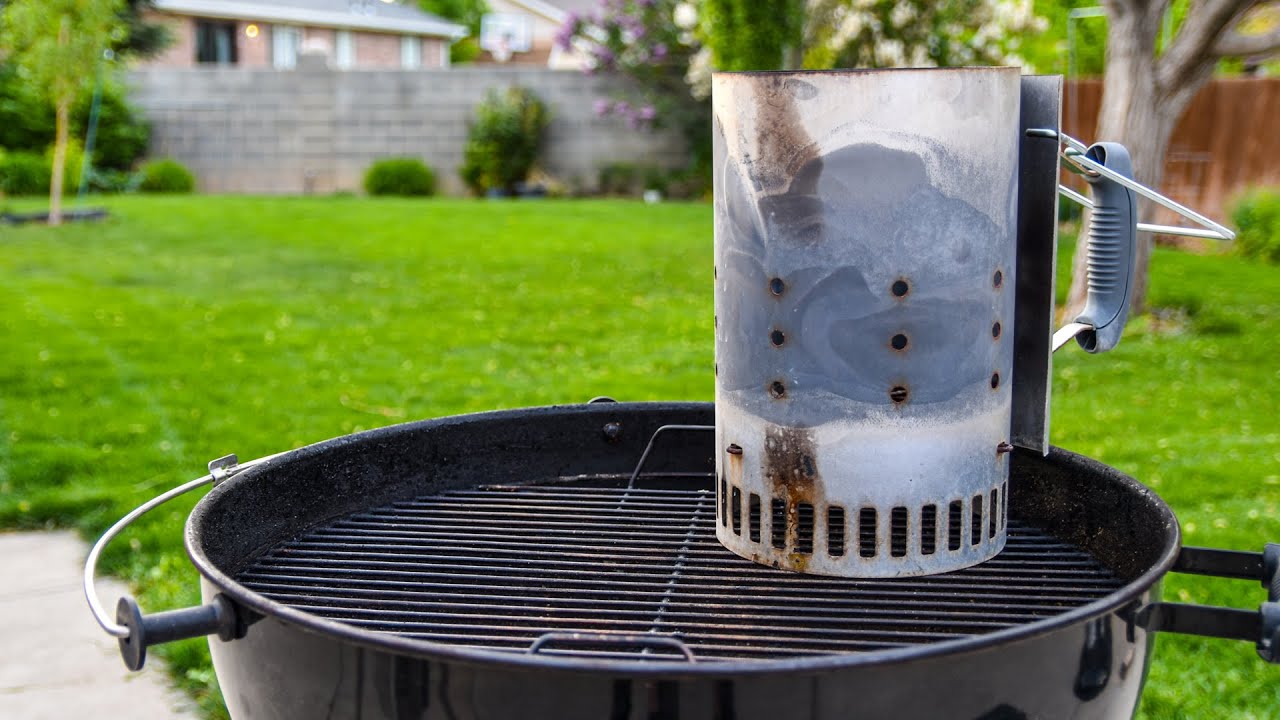
The magic of a chimney starter lies in its design. Typically a cylindrical metal container with an open top and bottom, it features a smaller, perforated compartment near its base designed to hold crumpled newspaper or charcoal starters. When lit from below, the chimney effect – a natural draft created by rising hot air – draws oxygen through the coals, forcing them to ignite rapidly and evenly from the bottom up. This method not only speeds up the lighting process but also prevents the uneven hotspots that can plague lighter-fluid-soaked coals, promising a more controlled and enjoyable grilling experience.
| Category | Details |
| :————- | :———————————————————————————————————————————————————————— |
| **Product** | Chimney Starter |
| **Function** | Rapidly and evenly ignites charcoal briquettes or lump charcoal for grilling. |
| **Mechanism** | Utilizes the chimney effect (convection) to draw air through the charcoal, promoting faster and more uniform ignition. |
| **Fuel Source**| Typically ignited with crumpled newspaper, paper fire starters, or solid fuel starters placed in the lower compartment. |
| **Advantages** | Faster lighting time, more even coal distribution, chemical-free (no lighter fluid taste transfer), promotes uniform heat. |
| **Materials** | Commonly made of galvanized steel or stainless steel. |
| **Size** | Available in various sizes, typically holding between 3 to 10 pounds of charcoal. |
| **Usage** | Fill the top with charcoal, place starter material in the bottom, light the starter material, wait for coals to ash over (approx. 10-15 minutes), then pour onto the grill. |
| **Reference** | [Weber Chimney Starter](https://www.weber.com/US/en/accessories/grilling-tools/rapid-fire-chimney-starter/7447.html) |
## The Anatomy and Mechanics of a Chimney Starter
A standard chimney starter is a marvel of simple engineering. Its primary component is a metal cylinder, usually made of galvanized steel or stainless steel for durability and heat resistance. Inside this cylinder, near the bottom, is a grate or perforated section that holds your ignition source. The top of the cylinder is open to receive the charcoal, and the bottom is also open to allow air to be drawn in and flames to escape. This design is crucial for establishing the airflow that drives the rapid ignition of the charcoal.
### How the Chimney Effect Works
The “chimney effect” is the fundamental principle behind a chimney starter’s efficiency. When the ignition source at the bottom is lit, it heats the air within the starter. As this air heats up, it becomes less dense and rises, creating an upward draft. This draft pulls fresh, oxygen-rich air in through the bottom openings of the chimney starter. The continuous flow of oxygen acts as a bellows, feeding the flames and causing the charcoal above to ignite and burn more intensely and evenly than it would if simply stacked on the grill and lit from the side.
## Step-by-Step: Mastering the Chimney Starter Technique
Using a chimney starter is straightforward, but a few key steps ensure optimal results.
### Preparation is Key
1. **Choose Your Starter Material:** You have several options for igniting the coals.
* **Newspaper:** Two to three sheets of crumpled newspaper are a classic and cost-effective choice. Be sure to crumple them loosely to allow for airflow.
* **Paper Fire Starters:** Commercially available paper fire starters are designed for this purpose and burn reliably.
* **Solid Fuel Starters:** These are wax-impregnated cubes or discs that provide a consistent flame.
2. **Position the Starter:** Place your chosen starter material in the lower compartment of the chimney starter. If using newspaper, ensure it’s positioned so that it will easily light and burn upwards.
3. **Load the Charcoal:** Fill the upper portion of the chimney starter with the desired amount of charcoal. The amount will depend on the size of your grill and how long you plan to cook. A good rule of thumb is to fill it about two-thirds to three-quarters full for most grilling sessions.
### The Ignition Process
1. **Light the Starter:** Carefully reach under the chimney starter and light the newspaper, fire starter, or fuel disc in several places.
2. **Wait for the Glow:** Allow the chimney starter to work its magic. In about 10-15 minutes, you’ll notice the coals at the top beginning to glow orange and eventually turn grey with ash. This indicates they are fully lit and ready.
3. **Pour the Coals:** Wearing heat-resistant gloves, carefully grasp the heat-proof handles of the chimney starter. Tilt it and pour the hot coals directly onto your grill grates. Distribute them evenly for consistent heat, or bank them to one side for a two-zone cooking setup.
A full chimney of coals typically provides enough heat for about an hour of grilling, depending on the type of charcoal and ambient conditions.
## Tips for Optimal Chimney Starter Use
* **Don’t Rush:** Patience is a virtue. Wait until the coals are fully covered in a grey ash before pouring them. This ensures they are burning efficiently.
* **Two-Zone Cooking:** For more control, pour half the coals onto one side of the grill and leave the other side empty. This creates a hot zone for searing and a cooler zone for indirect cooking.
* **Lid Placement:** Once the coals are on the grill, place the lid back on. The vents in the lid control airflow and temperature. Fully open vents for maximum heat, or close them partially to reduce heat.
### Troubleshooting Common Chimney Starter Issues
* **Coals Not Lighting:** Ensure you used enough starter material and that it was lit properly. Check that the bottom openings of the chimney starter are not blocked, allowing for adequate airflow.
* **Uneven Lighting:** This can sometimes happen if the charcoal is packed too tightly or if the starter material wasn’t evenly distributed. Try shaking the chimney starter gently (while wearing gloves!) before pouring, or redistribute the coals on the grill.
## Frequently Asked Questions (FAQ)
**Q1: How much charcoal should I put in a chimney starter?**
A1: Most standard chimney starters hold between 5 to 10 pounds of charcoal. Refer to your chimney starter’s specific capacity, but generally, fill it about two-thirds to three-quarters full for typical grilling.
**Q2: Is using a chimney starter better than lighter fluid?**
A2: Yes, for most users, a chimney starter is superior. It provides quicker, more even lighting and avoids the chemical taste that lighter fluid can impart to food. It’s also generally considered safer and more environmentally friendly.
**Q3: How long does it take for the coals to be ready?**
A3: Typically, it takes about 10 to 15 minutes for the coals to ash over and be ready to use, once lit. This can vary slightly depending on the type of charcoal and weather conditions.
**Q4: Can I use a chimney starter for lump charcoal?**
A4: Absolutely! Chimney starters work effectively with both briquettes and lump charcoal. Lump charcoal may ignite slightly faster.
**Q5: What are the benefits of using a chimney starter?**
A5: Key benefits include faster ignition, more even coal heating, a cleaner taste for your food, and a more controlled grilling experience.
The “chimney effect” is a natural phenomenon where heated air rises, creating a draft that pulls in cooler air from below. This principle is harnessed by chimney starters to efficiently oxygenate and ignite charcoal.
By adopting the chimney starter method, you’re not just lighting charcoal; you’re investing in a superior grilling experience. It’s a simple tool that yields significant improvements in heat management, food flavor, and overall grilling satisfaction, making every barbecue a potential masterpiece.