# Maintaining the Perfect Pool pH: A Comprehensive Guide
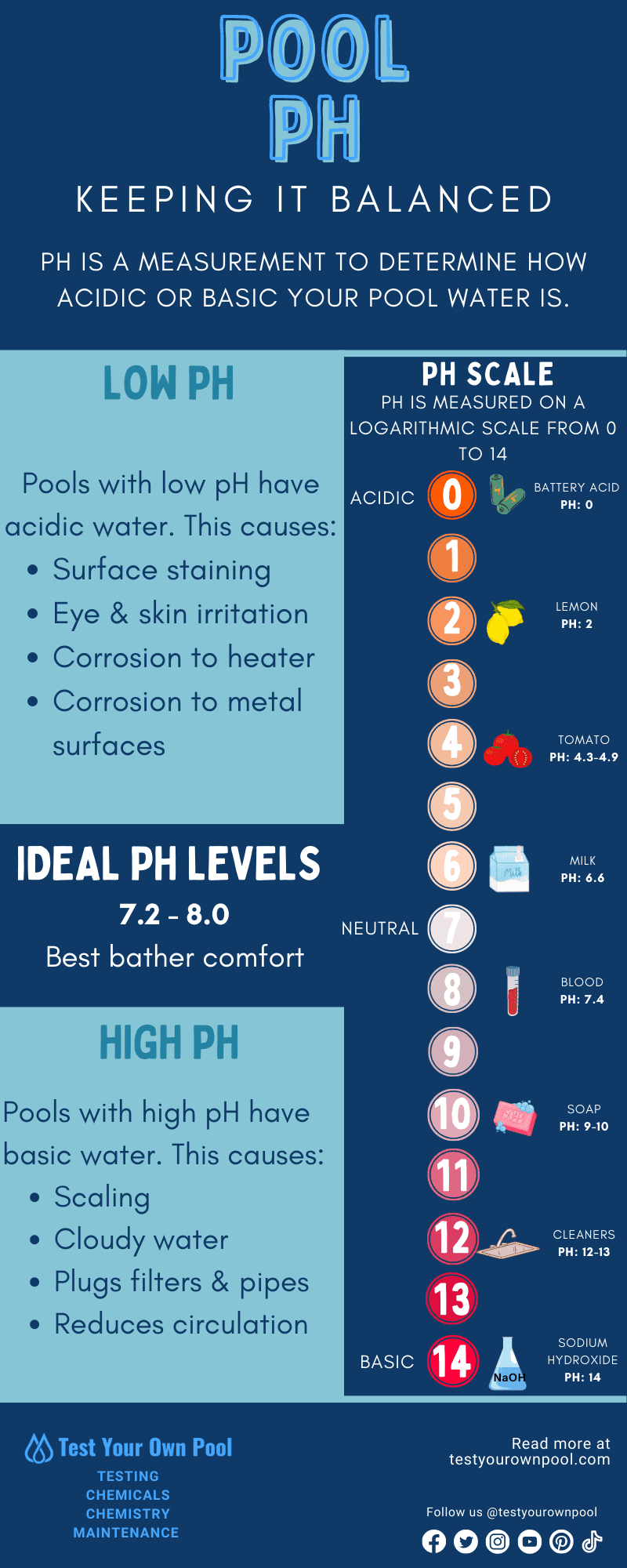
Achieving and maintaining the ideal pH balance in your swimming pool is crucial for a safe, enjoyable, and healthy aquatic environment. The pH scale, ranging from 0 to 14, measures the acidity or alkalinity of water. For swimming pools, the target range is typically between 7.2 and 7.6. This sweet spot ensures bather comfort by preventing eye and skin irritation, maximizes the effectiveness of sanitizers like chlorine, and protects pool equipment from corrosion and scaling. An imbalanced pH can lead to a host of problems, from cloudy water and algae blooms to damage to your pool’s liner and filtration system. Regularly monitoring and adjusting your pool’s pH is a fundamental aspect of responsible pool ownership.
Understanding the factors that influence pool pH is the first step in effective management. Numerous elements can cause pH levels to fluctuate, including
* **Rain and splash-out:** Rainwater is generally acidic, and its introduction into the pool can lower pH. Evaporation also removes water, leaving dissolved solids behind, which can increase pH.
* **Chemical additions:** The types and amounts of chemicals you add to your pool directly impact pH. For instance, chlorine can initially lower pH, while certain alkalinity adjusters will raise it.
* **Swimmers:** Human sweat, lotions, and cosmetics introduced by swimmers can alter the water’s chemical balance, including pH.
* **Debris:** Organic matter like leaves and dirt can decompose, affecting water chemistry.
### Why Pool pH Matters
The consequences of an incorrect pH level extend beyond mere aesthetics. If the pH is too low (acidic), it can lead to:
* Corrosion of pool equipment, including pumps, heaters, and ladders.
* Etching of plaster surfaces and damage to vinyl liners.
* Irritation to swimmers’ eyes and skin.
* Reduced effectiveness of chlorine, requiring more to achieve the same sanitizing effect.
Conversely, if the pH is too high (alkaline), you may encounter:
* Cloudy water due to the precipitation of calcium carbonate.
* Scale formation on pool surfaces and equipment.
* Clogged filters.
* Skin and eye irritation.
* A significant decrease in chlorine’s effectiveness, creating an unsanitary swimming environment.
## Adjusting Your Pool’s pH
When your pool’s pH is too low, it’s time to increase alkalinity. The most common chemical used for this purpose is soda ash (sodium carbonate). It’s essential to add chemicals gradually and re-test the water after each addition to avoid over-correction. Always follow the manufacturer’s instructions for the specific product you are using and wear appropriate safety gear.
### Raising pH with Soda Ash
1. **Test your water:** Use a reliable pool test kit to determine the current pH level.
2. **Calculate the dosage:** Refer to the product’s instructions for the recommended amount of soda ash needed to raise the pH by a certain amount, considering your pool’s volume.
3. **Dissolve the soda ash:** In a bucket of pool water, dissolve the measured amount of soda ash completely. This helps distribute it evenly and prevents concentrated spots.
4. **Add to the pool:** With the pool pump running, slowly pour the dissolved soda ash mixture around the perimeter of the pool.
5. **Circulate and re-test:** Allow the water to circulate for at least four hours, or as recommended by the manufacturer, then re-test the pH. Repeat the process if necessary, making small adjustments each time.
## Lowering Pool pH
If your pool’s pH is too high, you’ll need to introduce an acid to lower it. Muriatic acid (hydrochloric acid) or dry acid (sodium bisulfate) are common choices. Muriatic acid is a liquid, while dry acid is a granular solid. Both are potent, and safety precautions are paramount.
### Lowering pH with Muriatic Acid
1. **Test your water:** Accurately measure the current pH level.
2. **Calculate the dosage:** Consult the acid’s instructions for the appropriate amount to reduce pH, taking into account your pool’s size.
3. **Dilute the acid:** **Crucially, always add acid to water, never water to acid.** Pour the measured amount of acid into a bucket filled with pool water.
4. **Add to the pool:** With the pump running, carefully pour the diluted acid mixture into the deepest part of the pool, away from the skimmer and any metal components.
5. **Circulate and re-test:** Let the water circulate for at least four hours, then test the pH again. Continue making small adjustments as needed.
Factoid: The ideal pH range for pool water (7.2-7.6) is very close to that of human tears, which is why maintaining this balance prevents eye irritation for swimmers.
## Maintaining Optimal Alkalinity
While pH is critical, total alkalinity (TA) plays a vital supporting role. TA acts as a buffer, resisting sudden changes in pH. The recommended TA range for most pools is between 80 and 120 parts per million (ppm). If your TA is too low, your pH will be difficult to control. If it’s too high, your pH may become overly resistant to adjustment.
### Adjusting Total Alkalinity
* **To increase TA:** Add an alkalinity increaser, typically sodium bicarbonate (baking soda). Dissolve it in water and add it to the pool as per product instructions.
* **To decrease TA:** This is more complex. It usually involves adding a pH decreaser (acid) to lower both pH and TA. You may need to repeat this process over several days to bring TA down.
## Frequently Asked Questions (FAQ)
**Q1: How often should I test my pool’s pH?**
A1: It’s recommended to test your pool’s pH at least two to three times a week, and more frequently after adding chemicals, heavy rain, or heavy use.
**Q2: What happens if I add too much pH adjuster?**
A2: Over-correcting pH can lead to the opposite problem, requiring further adjustments. It’s always better to make small, incremental changes and re-test.
**Q3: Can I use household chemicals to adjust my pool’s pH?**
A3: No, it’s strongly advised against using household chemicals. Pool-specific chemicals are formulated for water treatment and are safer and more effective for maintaining pool chemistry.
**Q4: How does temperature affect pool pH?**
A4: While not a primary driver, warmer water tends to hold less dissolved gas, which can slightly increase pH.
Factoid: A “pH crash” can occur during hot weather or after heavy use, where the pH level drops rapidly, necessitating immediate attention to prevent damage and discomfort.
### Pool pH Maintenance Checklist
* Regularly test pH (2-3 times/week).
* Maintain Total Alkalinity between 80-120 ppm.
* Add chemicals slowly and in diluted form.
* Ensure pool pump is running during chemical additions and circulation.
* Wear safety gear when handling pool chemicals.
* Keep a log of chemical additions and test results.
* Address pH imbalances promptly.
By understanding the causes and effects of pH imbalance and following these guidelines for adjustment and maintenance, you can ensure your swimming pool remains a clear, comfortable, and safe oasis for all to enjoy.
| Category | Information |
| :——————- | :———————————————————————– |
| **Pool Type** | In-ground, Above-ground, Saltwater, Chlorine |
| **Primary Function** | Water sanitation, Bather comfort, Equipment protection |
| **Key Parameter** | pH (Potential of Hydrogen) |
| **Ideal Range** | 7.2 – 7.6 |
| **Total Alkalinity** | 80 – 120 ppm (acts as a buffer for pH) |
| **Adjusters (Raise)**| Soda Ash (Sodium Carbonate), Alkalinity Increaser (Sodium Bicarbonate) |
| **Adjusters (Lower)**| Muriatic Acid (Hydrochloric Acid), Dry Acid (Sodium Bisulfate) |
| **Testing Frequency**| 2-3 times per week |
| **Reference** | [Pool pH Explained – Poolmath](https://www.poolmath.com/learn/what-is-ph-in-a-pool) |