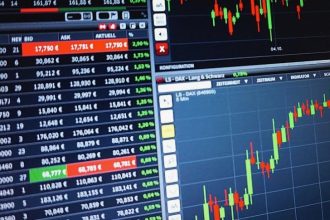
In the bustling, ever-evolving landscape of global finance, two titans stand tall, beckoning aspiring investors with promises of prosperity: the venerable stock market and the dynamic foreign exchange (Forex) market․ For countless individuals dreaming of financial independence, a pivotal question frequently arises, echoing through online forums and whispered across trading desks: is Forex trading inherently easier than navigating the complexities of stock trading? This isn’t merely a rhetorical inquiry; it’s a fundamental consideration shaping investment strategies worldwide, influencing countless financial journeys․
Indeed, the perception of “ease” is profoundly subjective, colored by individual risk tolerance, available capital, and a willingness to commit to rigorous market education․ While both avenues offer immense potential for wealth creation, they present distinctly different operational frameworks and challenges․ Understanding these nuances is absolutely critical for anyone contemplating stepping into the arena, as a misinformed decision could lead to considerable frustration or, worse, significant financial setbacks․ By carefully dissecting the core mechanics, market structures, and inherent characteristics of each, we can begin to demystify this enduring debate and empower you with the clarity needed to make an informed choice․
| Feature/Aspect | Forex Trading | Stock Trading | Ease/Complexity Implication |
|---|---|---|---|
| Market Hours | 24 hours a day, 5 days a week (global market) | Specific exchange hours (e․g․, NYSE: 9:30 AM ― 4:00 PM ET) | Forex: Offers unparalleled flexibility, allowing traders to react to news anytime․ Stocks: Requires adherence to fixed schedules, potentially limiting access for some․ |
| Liquidity | Extremely high ($7+ trillion daily volume) | Varies greatly by stock; large-cap stocks are highly liquid, small-cap less so | Forex: Generally easier to enter/exit positions without significant price impact due to massive volume․ Stocks: Less liquid stocks can be difficult to trade at desired prices․ |
| Leverage | Typically higher (e․g․, 1:30 to 1:500 or more) | Generally lower (e․g․, 1:2 to 1:4 for margin accounts) | Forex: Magnifies potential gains and losses, demanding rigorous risk management․ Can appear “easier” to start with less capital but is riskier․ Stocks: Lower leverage reduces immediate risk but requires more capital for significant positions․ |
| Number of Instruments | Fewer instruments (major, minor, exotic currency pairs) | Tens of thousands of individual stocks, ETFs, mutual funds | Forex: Simpler universe to master, focusing on macroeconomics and technical analysis for a limited set of pairs․ Stocks: Requires extensive research into individual company fundamentals and industry trends, a far broader scope․ |
| Cost of Trading | Primarily through spreads (difference between bid/ask price) | Commissions, ECN fees, and spreads | Forex: Often perceived as lower cost for frequent trading due to spread-based pricing․ Stocks: Commissions can add up, especially for active traders, though many brokers now offer commission-free stock trades․ |
| Market Drivers | Macroeconomic news, central bank policies, geopolitical events | Company earnings, industry trends, economic data, sector-specific news | Forex: Focuses on global economic narratives; can be simpler to track major economic indicators․ Stocks: Demands deep dives into company-specific reports, balance sheets, and management teams․ |
For a deeper dive into financial market education, consider exploring reputable resources like Investopedia: www․investopedia․com
One of the most compelling arguments for Forex trading often revolves around its unparalleled accessibility․ Operating 24 hours a day, five days a week, the global currency market never truly sleeps, offering traders remarkable flexibility to engage at their convenience, whether during a lunch break or in the dead of night․ This constant motion, facilitated by a vast network of international banks and financial institutions, ensures incredible liquidity, meaning transactions can be executed almost instantaneously without significant price slippage․ Conversely, stock markets, tied to specific exchanges like the New York Stock Exchange or the London Stock Exchange, adhere to more rigid trading hours, potentially posing a challenge for those with demanding daytime schedules․ This round-the-clock availability in Forex can feel liberating, reducing the pressure to act within narrow windows and fostering a more adaptable trading lifestyle for many․
Furthermore, the sheer volume of instruments presents a stark contrast․ In the Forex market, traders primarily focus on a relatively limited number of major and minor currency pairs, such as EUR/USD or GBP/JPY․ Mastering the dynamics of these few pairs, understanding their reactions to global macroeconomic news, and applying technical analysis can feel more manageable than sifting through thousands of individual company stocks, each with its own unique financial reports, industry-specific trends, and management team dynamics․ For a newcomer, the thought of meticulously researching countless balance sheets and quarterly earnings reports can be incredibly daunting, often leading to paralysis by analysis․ The Forex market, with its concentrated focus, therefore often appears to offer a clearer, less fragmented learning curve for beginners, allowing them to build expertise in a more defined scope․
However, the perceived “ease” of Forex comes with its own set of formidable challenges, primarily centered around leverage and volatility․ Forex brokers typically offer significantly higher leverage ratios than those available in stock trading, sometimes reaching 1:500 or even higher․ While this allows traders to control large positions with relatively small amounts of capital, it dramatically amplifies both potential gains and, more critically, potential losses․ An ill-timed trade, exacerbated by high leverage, can wipe out an entire trading account with astonishing speed․ This inherent risk demands an exceptionally disciplined approach to money management and a profound understanding of market movements, transforming what initially seems “easier” into a high-stakes endeavor requiring constant vigilance․ As renowned financial analyst Michael Spencer once wisely observed, “Leverage is a double-edged sword; it can carve out fortunes but also slash them into oblivion if wielded carelessly․”
Ultimately, the question of whether Forex trading is “easier” than stock trading isn’t about one being objectively superior but rather about aligning your personal characteristics with the market’s demands․ If you thrive on constant action, prefer a global macro perspective, and possess the discipline to manage high leverage, Forex might indeed feel more intuitive and accessible․ Conversely, if you prefer fundamental analysis, enjoy deep-diving into company specifics, and appreciate the relative stability of lower leverage, then stock trading could be your more comfortable path to prosperity․ Both markets are dynamic ecosystems, brimming with opportunities for the well-prepared․ By integrating insights from seasoned professionals and thoroughly understanding your own financial temperament, you can confidently embark on a rewarding journey, harnessing the power of either market to build a future of unparalleled financial growth․ The future of your portfolio, after all, depends not on inherent ease, but on informed effort․