# Mastering Your Hot Tub: A Comprehensive Guide to Lowering Alkalinity
Maintaining the perfect hot tub environment is crucial for a relaxing and hygienic experience. While many factors contribute to water balance, alkalinity often plays a pivotal, yet sometimes overlooked, role. If your hot tub’s alkalinity levels are too high, it can lead to a cascade of problems, including cloudy water, scale formation, and reduced sanitizer effectiveness. This guide will delve deep into understanding hot tub alkalinity, why it matters, and most importantly, how to effectively lower it.
High alkalinity can wreak havoc on your hot tub’s water chemistry. It acts as a buffer, resisting changes in pH. When alkalinity is too high, it becomes difficult to adjust the pH, leading to fluctuations that can damage your equipment and irritate your skin and eyes. Furthermore, elevated alkalinity can cause calcium to precipitate out of the water, resulting in unsightly and damaging scale buildup on your hot tub’s surfaces, jets, and internal components.
| Category | Information |
| :——————– | :——————————————————————————————————————————————————————————————————————————————————————————————————————————————————————– |
| **Topic** | Lowering Alkalinity in a Hot Tub |
| **Importance** | Proper alkalinity levels are essential for stabilizing pH, preventing scale formation, and ensuring the effectiveness of sanitizers. |
| **Recommended Range** | Total Alkalinity (TA) should ideally be between 80-120 parts per million (ppm). |
| **Consequences of High Alkalinity** | – Difficulty in adjusting pH
– Cloudy water
– Scale formation on surfaces and equipment
– Reduced sanitizer efficiency
– Potential for corrosion |
| **Methods to Lower Alkalinity** | – Acid addition (e.g., dry acid or liquid acid) |
| **Testing** | Regular testing with a reliable test kit or strips is crucial for monitoring and maintaining proper levels. |
| **Reference** | [Pool and Hot Tub Alliance](https://www.phta.org/) |
## Understanding Total Alkalinity
Total alkalinity (TA) refers to the concentration of alkaline substances, primarily carbonates, bicarbonates, and hydroxides, dissolved in your hot tub water. It acts as a buffer, meaning it helps to prevent rapid swings in pH. Think of it as a shock absorber for your water’s acidity or basicity. The ideal range for total alkalinity in a hot tub is typically between 80 and 120 parts per million (ppm).
### Why Alkalinity Matters for Your Hot Tub
Alkalinity and pH are closely intertwined. When alkalinity is within the ideal range, it provides a stable environment for maintaining the correct pH level. A stable pH is vital for several reasons:
* **Sanitizer Effectiveness:** Your sanitizer, like chlorine or bromine, works most effectively within a specific pH range. If the pH is too high or too low, the sanitizer’s ability to kill bacteria and viruses is significantly compromised.
* **Comfort:** Water that is out of balance can cause skin and eye irritation. Maintaining the correct pH ensures a comfortable soaking experience.
* **Equipment Protection:** Corrosive water (low pH and alkalinity) can damage metal components, while scaling water (high pH and alkalinity) can lead to buildup on surfaces and within the jets.
Factoid: Total alkalinity not only buffers pH but also influences the rate at which pH can change. A water body with high alkalinity is more resistant to pH fluctuations than one with low alkalinity.
## Diagnosing High Alkalinity
The first step in addressing high alkalinity is accurate measurement. You’ll need a reliable hot tub test kit or test strips. Follow the instructions on your kit carefully to test your water’s total alkalinity. If your reading is consistently above the 120 ppm mark, it’s time to take action.
### Symptoms of High Alkalinity
Besides the direct readings from your test kit, a few telltale signs can indicate that your alkalinity is too high:
* **Difficulty stabilizing pH:** You’ll find yourself constantly adjusting the pH, only for it to drift back up quickly.
* **Cloudy water:** High alkalinity can contribute to water cloudiness as the water struggles to remain clear.
* **Scale formation:** You might notice a white, chalky residue forming on the waterline, jets, or heating elements.
## Methods for Lowering Hot Tub Alkalinity
The primary method for reducing total alkalinity in a hot tub is by carefully adding an acid. This process lowers both alkalinity and pH, so it’s important to proceed with caution and re-test frequently.
### Using Acid to Lower Alkalinity
The most common chemicals used for lowering alkalinity are:
* **Dry Acid (Sodium Bisulfate):** This is a granular form of acid that is generally considered safer to handle than liquid acid.
* **Liquid Acid (Muriatic Acid):** This is a more potent form of acid and requires extra caution during handling and application.
**Important Safety Precautions:**
* **Always add chemicals to water, never water to chemicals.**
* **Wear protective eyewear and gloves.**
* **Ensure good ventilation.**
* **Never mix different pool or spa chemicals.**
* **Turn off the hot tub jets before adding chemicals.**
#### Step-by-Step Guide to Lowering Alkalinity:
1. **Test Your Water:** Confirm your alkalinity level is indeed high.
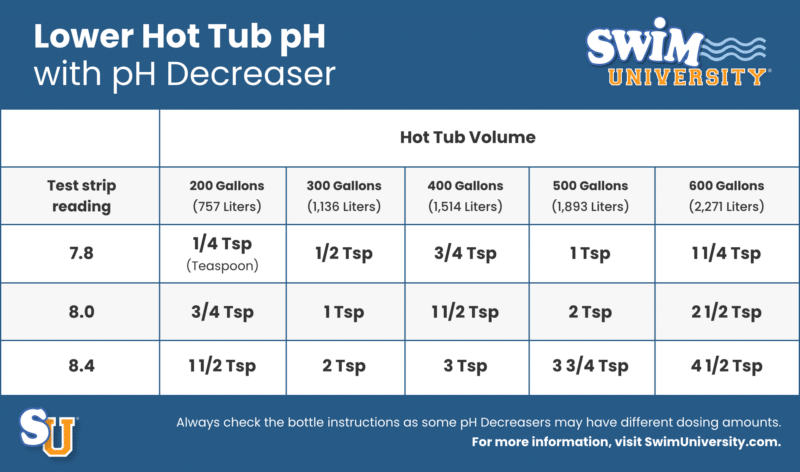
2. **Calculate Dosage:** Consult the instructions on your chosen acid product. They will provide specific dosage recommendations based on your hot tub’s water volume and the current alkalinity reading. It’s always better to start with a smaller dose than recommended and add more if needed.
3. **Add the Acid:**
* **For Dry Acid:** Pre-dissolve the measured amount of dry acid in a bucket of hot tub water. Slowly pour the solution around the perimeter of the hot tub.
* **For Liquid Acid:** Carefully measure the required amount. Slowly and gently pour the acid into the deep end of the hot tub, away from the skimmer and metal components.
4. **Circulate the Water:** Turn the jets on for at least 2-4 hours to ensure the acid is thoroughly mixed throughout the water.
5. **Re-test:** After circulation, re-test your total alkalinity and pH.
6. **Adjust as Needed:** If the alkalinity is still too high, repeat the process, adding a small amount of acid. Be patient, as it may take multiple applications to reach the desired level.
Factoid: Lowering alkalinity also lowers pH. Therefore, after you’ve successfully reduced your alkalinity, you will likely need to raise your pH back into the ideal range using a pH increaser (like soda ash).
### Alternative Methods (Less Common or Effective for Significant Drops)
* **Aeration:** While aeration can help to off-gas carbon dioxide and slightly raise pH, it is generally not an effective method for significantly lowering high alkalinity.
* **Water Replacement:** In cases of extremely high alkalinity or when other chemical adjustments are proving difficult, partially draining and refilling the hot tub with fresh water can help dilute the alkalinity. However, this is a more labor-intensive solution.
## Maintaining Ideal Alkalinity Levels
Once you’ve successfully lowered your hot tub’s alkalinity, ongoing maintenance is key to preventing it from rising again.
### Regular Testing Schedule
* **Daily/Before Each Use:** Check sanitizer levels and pH.
* **Weekly:** Test total alkalinity and pH.
* **Monthly:** Test calcium hardness and for any other specific concerns.
### Factors Influencing Alkalinity
Several factors can contribute to an increase in hot tub alkalinity over time:
* **Source Water:** The water you use to fill your hot tub may have naturally high alkalinity.
* **Additives:** Certain bath products or even some sanitizers can increase alkalinity.
* **Evaporation:** As water evaporates, the dissolved solids, including alkaline substances, become more concentrated.
### Tips for Prevention
* **Use a water pre-filter:** When filling your hot tub, a pre-filter can help remove minerals that contribute to high alkalinity.
* **Avoid over-adding balancing chemicals:** Stick to recommended dosages.
* **Address pH issues promptly:** Keeping your pH stable can indirectly help manage alkalinity.
## Frequently Asked Questions (FAQ)
**Q1: How often should I test my hot tub’s alkalinity?**
A1: It’s recommended to test your total alkalinity at least once a week, and more frequently if you are experiencing issues with water balance or after adding chemicals.
**Q2: Can I use vinegar to lower alkalinity?**
A2: While vinegar is acidic, it’s generally not recommended for use in hot tubs. Its effectiveness is limited, and it can introduce other compounds into the water that may cause issues. Stick to chuyên dụng spa or pool chemicals.
**Q3: My alkalinity is high, but my pH is low. What should I do?**
A3: This can happen. First, address the high alkalinity by adding acid. Once the alkalinity is in range, you will likely need to add a pH increaser to