# Mastering the Art of the Cast Iron Skillet: How to Fry the Perfect Steak
Achieving a perfectly pan-fried steak is a culinary endeavor that, when done correctly, yields a dish of unparalleled satisfaction. The allure of a steak seared to a beautiful, caramelized crust while remaining tender and juicy on the inside is a goal for many home cooks. The key to unlocking this potential often lies in the choice of cookware and a methodical approach to the cooking process. The cast iron skillet, with its exceptional heat retention and distribution properties, stands as the ideal vessel for this classic preparation.
Understanding the nuances of cooking steak in a cast iron pan involves more than just applying heat. It requires attention to detail, from selecting the right cut of meat to managing the cooking temperature and resting the steak appropriately. This guide will walk you through each step, demystifying the process and empowering you to create steakhouse-quality results in your own kitchen.
## The Foundation: Selecting and Preparing Your Steak
The journey to a perfect pan-fried steak begins long before the pan even heats up. The choice of steak and its preparation are paramount.
### Choosing the Right Cut
For pan-searing, thicker cuts of steak with good marbling tend to perform best. Cuts like ribeye, New York strip, and filet mignon are excellent choices due to their fat content, which contributes to both flavor and tenderness. Aim for steaks that are at least 1 to 1.5 inches thick.
### Preparation is Key
1. **Thawing:** Ensure your steak is fully thawed if it was previously frozen.
2. **Tempering:** Allow the steak to come to room temperature for at least 30-60 minutes before cooking. This ensures more even cooking.
3. **Drying:** Pat the steak thoroughly dry with paper towels. Moisture is the enemy of a good sear, as it will steam the steak rather than sear it.
4. **Seasoning:** Season generously with salt and freshly ground black pepper just before cooking.
## The Cast Iron Advantage
Cast iron skillets are celebrated for their ability to achieve and maintain high temperatures, crucial for developing a delicious crust on your steak.
### Why Cast Iron?
* **Superior Heat Retention:** Once hot, cast iron stays hot, providing consistent searing.
* **Even Heat Distribution:** It heats evenly across the surface, minimizing hot spots.
* **Natural Non-Stick Properties:** With proper seasoning, cast iron develops a natural non-stick surface.
### Getting the Pan Screaming Hot
Preheat your cast iron skillet over medium-high to high heat for at least 5-10 minutes. You want the pan to be very hot, almost smoking, before adding the steak. This intense heat is what creates the Maillard reaction, responsible for the flavorful brown crust.
## The Searing Process: Building Flavor and Texture
With your steak prepped and your cast iron pan ready, it’s time to bring them together.
### Adding the Fat
Once the pan is hot, add a high smoke point oil, such as canola, grapeseed, or avocado oil. A tablespoon or two is usually sufficient. You can also add butter towards the end of cooking for added flavor, but be mindful that butter can burn at high temperatures.
### The Sear
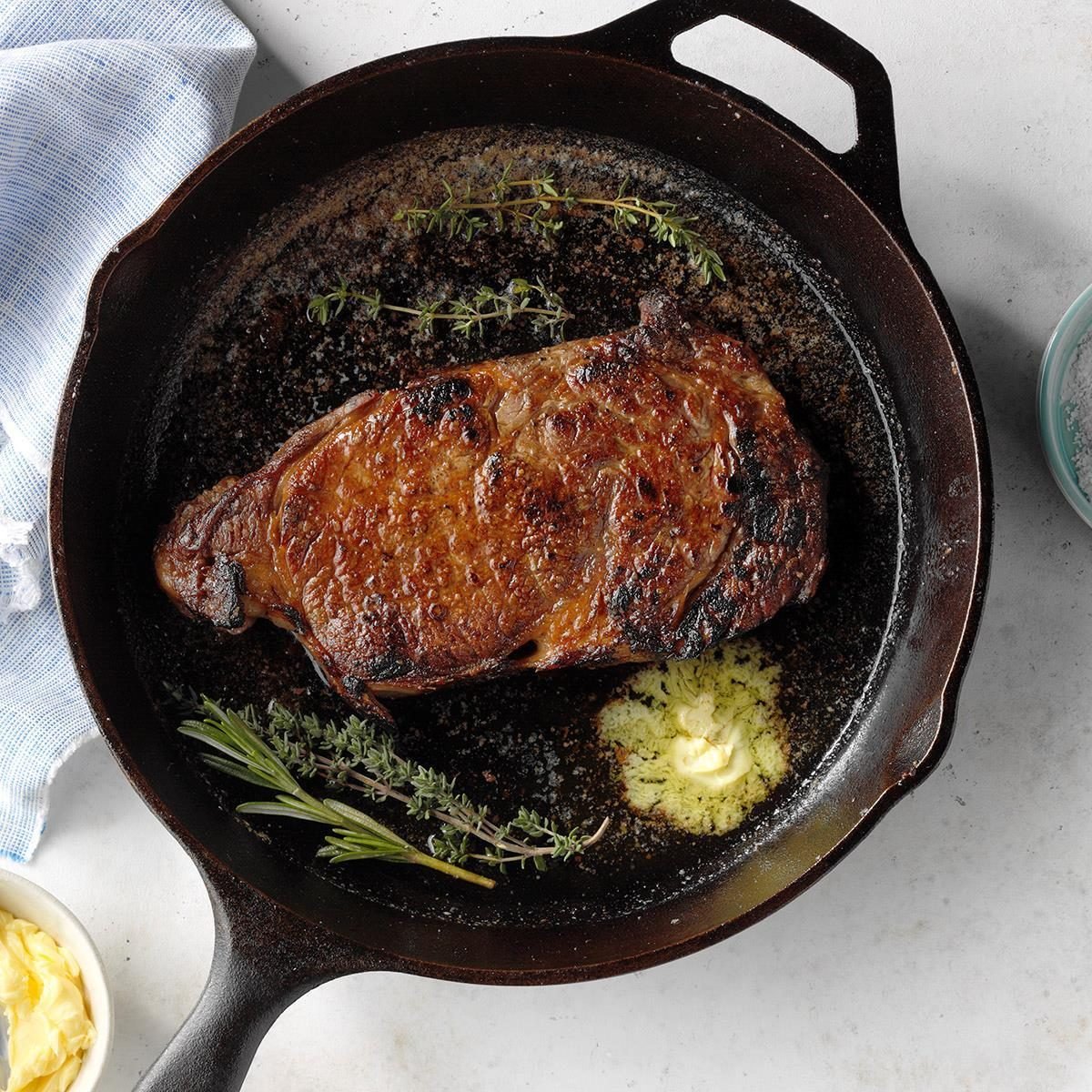
Carefully place the seasoned steak into the hot skillet. You should hear an immediate, satisfying sizzle. Resist the urge to move the steak for at least 2-3 minutes, allowing a deep brown crust to form.
### Flipping and Finishing
Flip the steak using tongs (never a fork, which pierces the meat and releases juices). Sear the other side for another 2-3 minutes. For thicker steaks, you may need to sear the edges as well.
#### Cooking to Your Desired Doneness
The internal temperature of the steak is the most accurate way to determine doneness. Use an instant-read meat thermometer:
* **Rare:** 120-125°F (49-52°C)
* **Medium-Rare:** 130-135°F (54-57°C)
* **Medium:** 140-145°F (60-63°C)
* **Medium-Well:** 150-155°F (66-68°C)
* **Well-Done:** 160°F+ (71°C+)
Remember that the steak’s temperature will rise a few degrees as it rests.
When searing steak in a cast iron pan, the key is to let the steak develop a crust without moving it. This initial sear is crucial for flavor development and texture.
### Basting for Extra Flavor (Optional)
In the last couple of minutes of cooking, you can add a knob of butter, a crushed garlic clove, and a sprig of rosemary or thyme to the pan. Tilt the pan and spoon the melted, fragrant butter over the steak repeatedly. This technique, known as basting, infuses the steak with additional flavor and moisture.
## The Crucial Resting Period
This is arguably the most overlooked, yet most critical, step in cooking a perfect steak.
### Why Rest Your Steak?
After cooking, the muscle fibers in the steak tighten up, pushing the juices towards the center. Resting allows these fibers to relax, redistributing the juices evenly throughout the meat, resulting in a more tender and moist steak.
### How to Rest
Transfer the steak to a clean cutting board or a plate. Tent it loosely with aluminum foil. Allow it to rest for at least 5-10 minutes for thinner steaks, and up to 15 minutes for thicker cuts.
The resting period allows the internal temperature to equalize and the juices to redistribute, ensuring every bite is succulent.
## Serving Your Masterpiece
Once rested, slice the steak against the grain for maximum tenderness. Serve immediately with your favorite sides.
### Common Mistakes to Avoid
* **Overcrowding the Pan:** Cook steaks one or two at a time to ensure proper searing.
* **Cutting into the Steak Too Soon:** Always rest your steak.
* **Using a Fork to Flip:** Tongs are the best tool for the job.
* **Not Getting the Pan Hot Enough:** A screaming hot pan is essential for a good sear.
## Frequently Asked Questions (FAQ)
**Q1: Can I use other oils besides high smoke point oils?**
While you can, high smoke point oils are recommended to prevent burning and smoking. If you use oils like olive oil, lower the heat to avoid excessive smoke.
**Q2: How do I clean my cast iron skillet after cooking steak?**
After the pan has cooled slightly, scrape out any excess food bits with a spatula. For stubborn bits, use a stiff brush or a cast iron scraper. Avoid using soap, as it can strip the seasoning. Rinse with hot water and dry thoroughly immediately. Apply a thin layer of oil to prevent rust.
**Q3: Can I add butter earlier in the cooking process?**
You can add butter, but it’s best to do so towards the end of cooking or during basting, as butter has a lower smoke point than many cooking oils and can burn if added too early to a very hot pan.
**Q4: What is the best way to know if my steak is done without a thermometer?**
While a thermometer is the most accurate method, experienced cooks can use the “touch test.” Press the steak with your finger: a rare steak will feel soft and yielding, medium-rare will have some resistance, and well-done will feel firm. However, this method requires practice and is less precise.
***
**Reference:**
| Category | Information |
| :——————– | :————————————————————————————————————————————————————————————————————————————————————————————————————————————————————— |
| **Cooking Method** | Pan-searing |
| **Cookware** | Cast Iron Skillet |
| **Key Technique** | High heat searing, proper resting |
| **Internal Temps** | Rare: 120-125°F, Med-Rare: 130-135°F, Medium: 140-145°F, Med-Well: 150-155°F, Well-Done: 160°F+ |
| **Essential Steps** | Temper steak, pat dry, season generously, preheat pan, use high smoke point oil, sear undisturbed, rest adequately. |
| **Authentic Reference** | [https://www.seriouseats.com/the-food-lab-we-need-to-talk-about-cast-iron-pans](https://www.seriouseats.com/the-food-lab-we-need-to-talk-about-cast-iron-pans) |