# Understanding Liquid Volume: Ounces in a 1.5 Liter Container
When you’re deciphering recipes, measuring ingredients for a favorite beverage, or simply trying to understand the quantities involved in everyday life, the conversion between different units of liquid volume can be a common point of confusion. One such frequent question revolves around how many ounces are contained within a 1.5-liter bottle or container. This seemingly simple query delves into the necessity of standardized measurement systems and the practical applications of volume conversions in various contexts.
The metric system, with liters as a base unit for volume, is widely used across the globe for its logical structure and ease of scaling. However, in many English-speaking countries, particularly the United States, the imperial or U.S. customary system, which uses fluid ounces, remains prevalent. This discrepancy necessitates a clear understanding of how to translate between these two systems, especially when dealing with recipes or product labeling that may use either.
## The Metric to Imperial Conversion
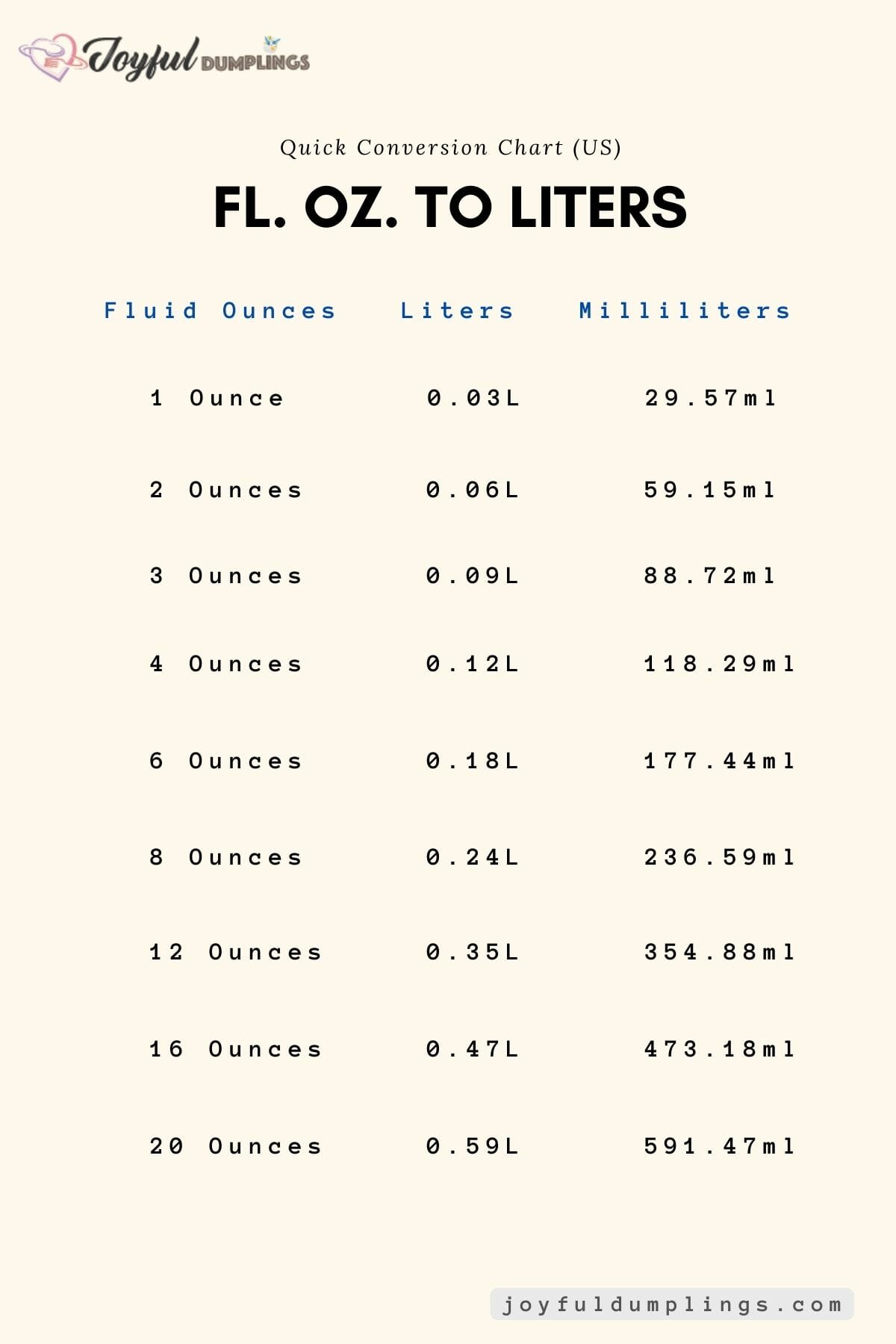
To accurately determine the number of ounces in 1.5 liters, we need to utilize the established conversion factor between liters and U.S. fluid ounces. One liter is equivalent to approximately 33.814 U.S. fluid ounces. Therefore, to find the total ounces in 1.5 liters, we multiply the volume in liters by this conversion factor.
### Step-by-Step Calculation
Here’s the breakdown of the calculation:
* **Volume in Liters:** 1.5 liters
* **Conversion Factor:** 33.814 U.S. fluid ounces per liter
* **Calculation:** 1.5 liters * 33.814 ounces/liter = 50.721 U.S. fluid ounces
Thus, a 1.5-liter container holds approximately 50.72 U.S. fluid ounces.
A U.S. fluid ounce is a unit of volume typically used for measuring liquids. It is defined as 1/128 of a U.S. gallon.
## Common Applications and Considerations
Understanding this conversion is useful in a variety of everyday situations:
* **Cooking and Baking:** Recipes often call for ingredients in both metric and imperial units. Knowing this conversion helps in accurately measuring liquids like water, milk, or oils.
* **Beverage Consumption:** Whether you’re pouring a drink or purchasing a beverage, understanding the volume in ounces can help you gauge serving sizes and compare products.
* **International Travel and Products:** When encountering products from countries that predominantly use the metric system, this conversion allows for a better understanding of the quantity.
### Factors Affecting Volume
It’s important to note that temperature can slightly affect the volume of liquids. However, for most practical purposes, the standard conversion factor is sufficient.
## Frequently Asked Questions (FAQ)
**Q1: Are U.S. fluid ounces the same as UK fluid ounces?**
A1: No, there is a difference. A U.K. fluid ounce is slightly larger than a U.S. fluid ounce. The conversion used here is for U.S. fluid ounces.
**Q2: Can I use this conversion for dry ingredients?**
A2: No, this conversion is specifically for fluid ounces, which measure volume. Dry ingredients are typically measured by weight.
**Q3: What is the difference between a liter and a gallon?**
A3: A liter is a metric unit of volume, while a gallon is an imperial or U.S. customary unit. One U.S. gallon is approximately 3.785 liters.
**Q4: Where can I find reliable conversion tools?**
A4: Numerous online conversion calculators and unit converter websites offer accurate conversions for various measurements.
The liter was originally defined as the volume of 1 kilogram of pure water at its freezing point and standard atmospheric pressure.
### Summary of Conversion
| Unit | Equivalent in Ounces (U.S. Fluid) |
| :———- | :——————————– |
| 1 Liter | 33.814 oz |
| 1.5 Liters | 50.721 oz |
| 1 Gallon | 128 oz |
| 1 Pint | 16 oz |
| 1 Cup | 8 oz |
**Reference:**
[National Institute of Standards and Technology (NIST)](https://www.nist.gov/pml/weights-and-measures)