Mastering the Art: How Long to Smoke Whole Chicken for Perfect Flavor and Juiciness
Embarking on the journey of smoking a whole chicken can seem daunting, but with the right knowledge, you can achieve incredibly flavorful and succulent results. Understanding the critical factors that influence cooking time is key to mastering this delicious technique. This guide will provide a comprehensive overview of how long to smoke whole chicken, ensuring a memorable culinary experience for you and your guests. Get ready to elevate your barbecue game and impress with a perfectly smoked bird.
Key Factors Influencing Smoking Time
Chicken Size and Weight
The most significant determinant of smoking time is the size and weight of the whole chicken. Larger birds naturally require more time to reach an internal temperature of 165°F (74°C) in the thickest part of the thigh. As a general guideline, you can estimate approximately 20-25 minutes per pound at a consistent smoking temperature. For instance, a 4-pound chicken might take between 1 hour and 20 minutes to 1 hour and 40 minutes, while a 6-pound chicken could take 2 to 2.5 hours.
Fact: Always rely on an internal meat thermometer rather than just time, as variations in chicken size and smoker temperature can significantly alter cooking duration.
Smoker Temperature Consistency
Maintaining a stable smoker temperature is crucial for predictable cooking times. Most pitmasters aim for a temperature range of 225°F to 275°F (107°C to 135°C) for smoking whole chicken. Lower temperatures will yield a longer smoking time but can result in a more tender, smoke-infused meat. Conversely, higher temperatures will shorten the cooking duration but may require closer monitoring to prevent overcooking. Fluctuations in temperature, such as opening the smoker lid frequently, will extend the overall time needed.
Wood Type and Smoke Intensity
While not directly impacting the time it takes for the chicken to cook through, the type of wood used for smoking influences the flavor profile and can indirectly affect how long you might choose to keep the chicken on the smoker for optimal smoke absorption. Popular choices like hickory, applewood, or pecan impart distinct flavors. Using too much wood or maintaining a very thick smoke can sometimes lead to a bitter taste, prompting some to shorten the smoking duration, though this is a matter of preference.
Preparing Your Whole Chicken for the Smoker
Before your chicken even hits the smoker, proper preparation is essential for both flavor and even cooking. This involves cleaning and drying the bird thoroughly. Many enthusiasts opt to brine their chicken, either wet or dry, to enhance moisture and taste. A dry brine, consisting of salt and seasonings rubbed under and over the skin, is particularly effective for achieving crispy skin during the smoking process. Seasonings can include paprika, garlic powder, onion powder, black pepper, and any other herbs you prefer.
Brining for Juiciness
Brining is a technique that significantly boosts the moisture content of the chicken, making it more forgiving during the smoking process. A wet brine involves submerging the chicken in a saltwater solution, often with aromatics, for several hours. A dry brine, as mentioned, uses salt and seasonings to draw out moisture initially, then reabsorbs the seasoned juices, resulting in a flavorful, tender bird. Allow ample time for brining, typically 4-12 hours depending on the method and chicken size.
Applying Rubs and Glazes
Once brined (or if skipping the brine), applying a flavorful rub is the next step. Your rub can be as simple or complex as you desire. Ensure the rub is applied evenly across the entire surface of the chicken, including under the skin where possible. For the last hour of smoking, you might consider applying a glaze made from ingredients like barbecue sauce, honey, or brown sugar. Glazes add an extra layer of flavor and caramelization but should be applied towards the end to prevent burning.
Smoking the Whole Chicken: Step-by-Step
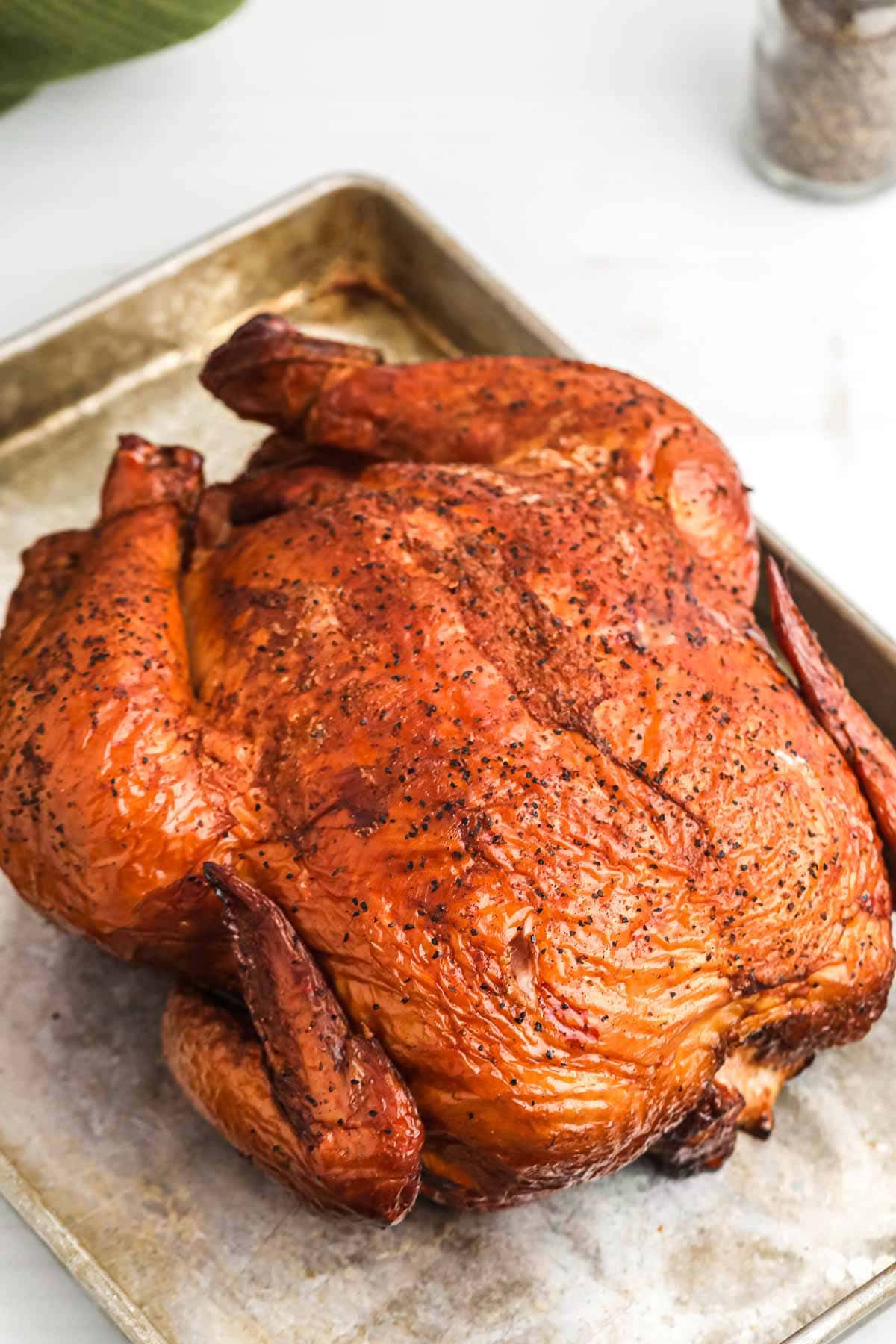
Once your chicken is prepped and your smoker is preheated to your desired temperature (typically 225-275°F), it’s time to begin the smoking process. Place the chicken directly on the grates or in a roasting pan, breast-side up or down depending on your preference for skin crispiness and moisture distribution. Some recommend starting breast-side down for the first portion of the cook to allow juices to baste the breast meat.
Monitoring Internal Temperature
The most reliable way to determine when your chicken is done is by using a meat thermometer. Insert the thermometer into the thickest part of the thigh, avoiding the bone. The target internal temperature for a whole smoked chicken is 165°F (74°C). For the breast meat, you might aim for slightly lower, around 160-165°F (71-74°C), as it will continue to cook while resting.
Tip: For a crisper skin, you can increase the smoker temperature to around 300-325°F (150-160°C) for the last 30-45 minutes of smoking, or briefly finish the chicken under the broiler.
Resting the Chicken
After reaching the target internal temperature, it is crucial to let the chicken rest. Remove the chicken from the smoker and tent it loosely with foil. Allow it to rest for at least 15-20 minutes before carving. This resting period allows the juices to redistribute throughout the meat, resulting in a much juicier and more tender final product. Skipping this step can lead to dry, less flavorful chicken.
Sample Smoking Times and Temperatures
Here’s a general guide to help you plan your smoking session. Remember these are estimates, and using a meat thermometer is always recommended.
| Chicken Weight | Target Smoker Temp | Estimated Smoking Time | Target Internal Temp |
|---|---|---|---|
| 3-4 lbs | 225°F – 250°F | 1.5 – 2 hours | 165°F (Thigh) |
| 4-5 lbs | 225°F – 250°F | 2 – 2.5 hours | 165°F (Thigh) |
| 5-6 lbs | 225°F – 250°F | 2.5 – 3 hours | 165°F (Thigh) |
| 6-7 lbs | 250°F – 275°F | 3 – 3.5 hours | 165°F (Thigh) |
Frequently Asked Questions About Smoking Whole Chicken
Q1: How do I ensure the chicken skin is crispy?
Crispy skin is often a challenge with smoked chicken. To achieve it, ensure the chicken is very dry before smoking, consider a dry brine, and use higher temperatures (around 275-300°F) for the last 30-45 minutes of smoking. Some users also finish the chicken briefly under a broiler or in a hot oven.
Q2: Can I cook a whole chicken at a lower smoking temperature (e.g., 200°F)?
Yes, you can smoke a whole chicken at lower temperatures like 200°F, but it will significantly increase the cooking time. This method can yield very tender meat, but it requires patience and careful monitoring to ensure the chicken reaches a safe internal temperature without drying out.
Q3: How do I prevent the chicken breast from drying out while the thighs cook?
The breast meat cooks faster than the thigh meat. To combat this, you can spatchcock the chicken to promote more even cooking, start the chicken breast-side down for the first part of the cook, or pull the chicken off the smoker once the thighs reach 165°F and the breast is around 160-165°F, then let it rest. The carryover cooking will bring the breast up to temperature.
Smoking a whole chicken is a rewarding culinary adventure that yields incredibly delicious results. By understanding the interplay of chicken size, smoker temperature, and preparation techniques, you can confidently determine the optimal smoking time. Remember to always rely on a meat thermometer to ensure your chicken is cooked to a safe and perfect internal temperature. Practice and experimentation will further refine your skills, allowing you to consistently produce juicy, flavorful smoked chicken. So, fire up your smoker, choose your favorite wood, and get ready to enjoy a truly exceptional meal.