# The Immovable Standard: Understanding the Height of an NBA Basketball Hoop
The iconic orange sphere soaring through the air, the swish of the net, the roar of the crowd – these are the indelible images of professional basketball. Yet, beneath the dazzling athleticism and strategic plays lies a fundamental constant, a seemingly simple measurement that underpins the entire game: the height of the basketball hoop. In the National Basketball Association (NBA), this height is not a matter of chance or variation; it’s a precisely defined standard that challenges players and dictates the very nature of the sport. Understanding this measurement is key to appreciating the skill, precision, and physical prowess required to succeed at the highest level of basketball.
This standard height has remained remarkably consistent throughout the evolution of the game, providing a stable platform upon which countless records have been set and broken. It’s a dimension that players must constantly account for, whether they’re soaring for a thunderous dunk or executing a delicate finger roll. The distance from the hardwood to the rim is more than just a number; it’s a psychological and physical barrier that defines the challenges and triumphs of every NBA game.
Here is a table with key information regarding the NBA basketball hoop:
| Category | Detail |
| :—————- | :——————————————- |
| **Hoop Height** | 10 feet (3.05 meters) from the floor to the top edge of the rim. |
| **Rim Diameter** | 18 inches (45.72 cm) internal diameter. |
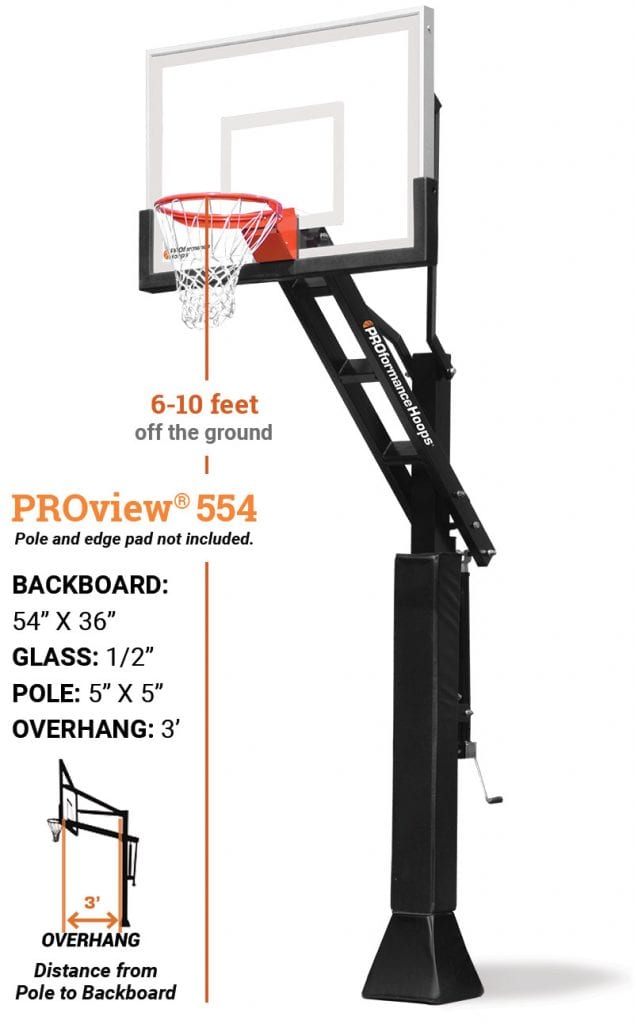
| **Backboard Size**| Typically 6 feet wide by 3.5 feet tall (1.83m x 1.07m). |
| **Material** | Steel for the rim, often a combination of acrylic, glass, or other durable materials for the backboard. |
| **Net Type** | Open-ended nylon or chain nets are common. |
| **Regulation** | Standardized by FIBA, NBA, and NCAA rules, with minor variations in backboard size at different levels. |
| **Authentic Reference** | [NBA Official Rules](https://www.nba.com/news/offical-rules-2022-2023) |
## The Science Behind the Standard: Why 10 Feet?
The 10-foot standard for an NBA basketball hoop is deeply rooted in the game’s history and evolution. When James Naismith invented basketball in 1891, he initially used peach baskets, which were nailed to the gymnasium balcony railing. These baskets were 10 feet above the floor, a height that was both practical for the gymnasium’s architecture and serendipitous in its impact on gameplay. This height, it turned out, created a unique blend of skill and athleticism that quickly defined the sport.
Over time, as the game evolved from its rudimentary beginnings, the peach baskets were replaced by nets attached to iron rims. However, the 10-foot height remained a constant, a testament to its effectiveness in creating a balanced and challenging game. This height ensures that both shooting accuracy and vertical leap are critical components of success.
### Factors Influencing the 10-Foot Standard:
* **Shooting Dynamics:** The 10-foot rim height forces players to develop a precise shooting arc, requiring the ball to travel upwards before descending into the basket. This introduces an element of skill and touch that would be diminished if the hoop were lower.
* **Vertical Athleticism:** The rim’s height demands significant jumping ability for dunks, layups, and rebounds. It elevates the importance of athleticism and explosiveness in the game.
* **Defensive Strategies:** A higher rim provides more space for defenders to contest shots and block attempts, influencing defensive strategies and requiring offensive players to be creative.
* **Game Flow and Spectacle:** The combination of shooting skill and athletic leaping at this height contributes to the fast-paced, dynamic, and often spectacular nature of basketball, making it an engaging sport for spectators.
## Dunking and Deception: How Hoop Height Shapes Play
The 10-foot hoop is the stage upon which the dramatic artistry of dunking is performed. It’s the barrier that elite athletes must overcome with sheer power, agility, and aerial grace. For the tallest players in the league, with wingspans that seem to defy gravity, the dunk is a signature move, a punctuation mark to a powerful offensive drive.
However, the height of the hoop also influences more subtle aspects of the game. Jump shots require a specific trajectory, and players spend countless hours refining their release point and arc to consistently score from various distances. Layups and floaters are executed with finesse, designed to circumvent outstretched arms and find the subtle angles that lead to points.
The consistent height of the NBA hoop, at 10 feet, is a crucial element that demands exceptional physical attributes from players. It necessitates a combination of leaping ability, shooting touch, and spatial awareness that few other sports require to such a degree.
### The Art of the Shot:
* **Jump Shot:** Requires a fluid motion, a consistent release point, and a calculated arc to clear defenders and drop through the net.
* **Layup:** Involves approaching the basket at an angle and using the backboard or a soft touch to score while evading defenders.
* **Dunk:** A powerful, above-the-rim finish that showcases incredible athleticism and strength.
## Beyond the NBA: Hoop Heights in Other Leagues
While the NBA adheres strictly to the 10-foot standard, it’s worth noting that variations exist in other basketball organizations and age groups. Understanding these differences can provide context for the NBA’s commitment to its established height.
* **FIBA (International Basketball Federation):** FIBA, which governs international basketball, also uses a 10-foot (3.05 meters) hoop height for senior competitions, aligning with NBA standards.
* **NCAA (National Collegiate Athletic Association):** Colleges and universities in the United States also use the 10-foot hoop height for both men’s and women’s basketball.
* **Youth Leagues:** For younger players, hoop heights are often adjusted to be lower, allowing them to develop proper shooting form and experience success more readily. These can range from 6 feet for very young children to progressively higher as players age. For example, 8-foot hoops are common for 8-10 year olds, and 9-foot for 11-12 year olds, before reaching the regulation 10-foot height.
The transition to the 10-foot hoop is a significant milestone for young basketball players, marking their entry into a more serious and demanding level of the sport. It requires a considerable adaptation in technique and physical development.
### Adjusting for Age and Skill:
* **Beginner Levels:** Lower hoops allow for easier scoring and faster development of fundamental skills like shooting form and coordination.
* **Intermediate Levels:** As players grow and improve, gradually increasing hoop heights help them acclimate to the challenges of regulation play.
* **Professional Levels:** The 10-foot hoop provides the ultimate test of skill, athleticism, and strategic play.
## Frequently Asked Questions About NBA Hoop Height
**Q1: Is the height of the basketball hoop the same in all professional leagues?**
A1: While international professional leagues governed by FIBA use the same 10-foot (3.05 meters) height as the NBA, there might be slight variations in other professional or semi-professional leagues globally. However, 10 feet is the widely accepted standard for high-level basketball.
**Q2: Why is the basketball hoop 10 feet high?**
A2: The 10-foot height was established by James Naismith, the inventor of basketball, and has remained a constant standard. This height was found to create a balanced game that requires both shooting skill and athletic ability, leading to exciting and strategic play.
**Q3: Does the height of the hoop affect how players shoot?**
A3: Absolutely. The 10-foot height necessitates a specific shooting arc and trajectory. Players must develop precise technique to get the ball over defenders and into the basket, contributing to the skill-based nature of shooting in basketball.
**Q4: Are there any exceptions to the 10-foot rule in the NBA?**
A4: No, all NBA games are played with regulation 10-foot hoops. The consistency of this measurement is fundamental to the integrity and standardization of the league’s competition.
**Q5: How does the hoop height influence dunking?**
A5: The 10-foot height is what makes dunking a display of exceptional athleticism. It requires players to have significant vertical leaping ability, strength, and coordination to elevate themselves above the rim and force the ball downwards through it.